 Twitter


To impart integrated knowledge of human anatomy through Ayurvedic and modern perspectives for better understanding of health and disease.
Overview
The Department of Rachana Sharira forms the foundation of Ayurvedic medical education by imparting comprehensive knowledge of human anatomy in correlation with classical Ayurvedic concepts. The department emphasizes conceptual clarity, cadaveric learning, observational skills, and ethical understanding, enabling students to build a strong base for clinical subjects.
Through structured teaching, hands-on dissection, academic enrichment, and community outreach, the department nurtures scientific thinking, manual skills, and social responsibility among undergraduate students.


-
Deliver in-depth knowledge of the human body through Ayurvedic and contemporary anatomy.
-
To nurture skilled, compassionate, and ethical medical professionals through cadaveric study and practical learning.
-
Promote research and innovation connecting classical concepts with modern anatomical science.
Academic & Practical Training
-
Cadaveric Dissection & Preservation
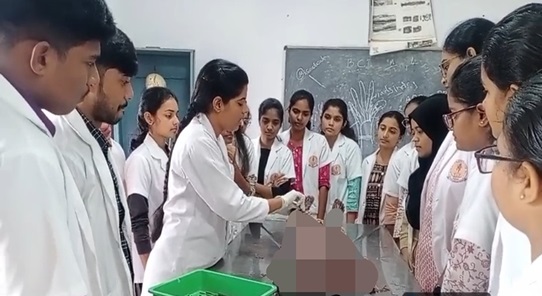
Students receive guided training in dead-body preservation and systematic dissection, fostering respect for cadaveric learning and enhancing three-dimensional anatomical understanding. -
Museum-based Learning
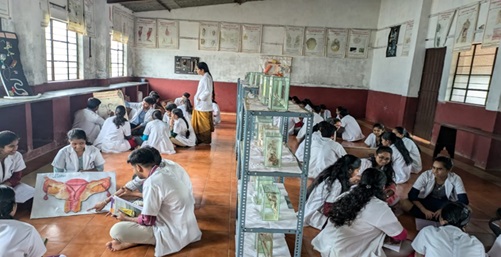
Regular use of departmental specimens, preserved bones, charts, and models to strengthen visual and applied learning. -
Student-Centric Learning Activities
Model making, chart preparation, specimen preservation, and group discussions are encouraged to reinforce theoretical concepts through creative application.
Academic Enrichment Activities
-
Guest Lectures
Expert academicians and clinicians deliver guest lectures on specialized anatomy topics, integrating classical perspectives with contemporary relevance. -
Educational Visits
Students visit reputed anatomy museums, including Manipal, and participate in virtual dissection sessions to gain exposure to advanced anatomical learning tools.
Outreach and Awareness Programmes
-
World Organ Donation Day
The department actively observes World Organ Donation Day through awareness talks and student-led creative competitions such as short films, body painting, and model making, promoting ethical and social awareness. -
Community Awareness Drives
Awareness jathas and exhibitions are conducted to educate the public about the importance and procedure of body donation, fostering community participation and responsibility. -
School & Public Exhibitions
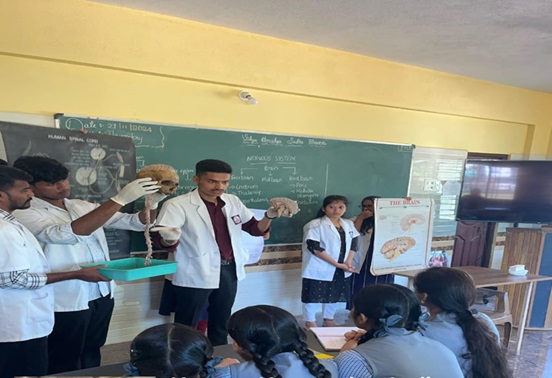
Exhibitions displaying human body models and anatomical specimens are organized in schools and public venues to promote health education across age groups.
Annual Signature Programme
-
Anatomy & Physiology Workshop
An annual interactive workshop conducted by first-year students introduces high-school students to the eight major human systems using specimens, charts, and models, inspiring early interest in medical sciences.