 Twitter


Programme: MD (Ayurveda) in Dravyaguna
About the department
The Department of Dravyaguna serves as a vital bridge between classical Ayurvedic wisdom and contemporary pharmacological science, focusing on the systematic study of medicinal plants, natural substances, and their therapeutic applications.
The department functions as a Postgraduate Department, offering advanced academic training and research orientation in Dravyaguna, in addition to contributing to undergraduate teaching, with emphasis on Dravya (drug), Guna (qualities), Karma (actions), and Prayoga (clinical application).
Rooted in classical texts and enriched by modern scientific approaches, the department nurtures competence in drug identification, pharmacological understanding, quality assurance, and rational clinical use of medicinal substances, preparing students for academics, clinical practice, research, and the herbal industry.
POSTGRADUATE PROGRAMME
-
-
Years: 3 Years
-
Postgraduate Intake Capacity: 6 seats per academic year

-
To emerge as a centre of excellence in Dravyaguna by integrating traditional Ayurvedic knowledge with modern scientific research, fostering innovation in herbal medicine for global health and well-being.

-
Deliver high-quality education integrating classical Dravyaguna with modern pharmacology and pharmacognosy
-
Promote research-driven learning through experimental, clinical, and interdisciplinary studies
-
Encourage sustainable drug discovery and quality assurance practices
-
Develop competent practitioners, researchers, and entrepreneurs in the field of Ayurveda and herbal sciences
-
Preserve and promote medicinal plant resources through conservation and cultivation initiatives
Academic Strengths
- Comprehensive teaching of Dravyaguna across BAMS and PG curriculum as per NCISM guidelines
- Strong emphasis on Dravya–Guna–Karma–Prabhava–Prayoga concepts
- Integration of classical references with contemporary scientific validation
- Focus on applied Dravyaguna for clinical decision-making and rational drug use
Teaching–Learning Practices
Traditional & Classical Approaches- Samhita-based teaching with classical references from Charaka, Sushruta, and Nighantus
- Shloka-based explanation and correlation with clinical utility
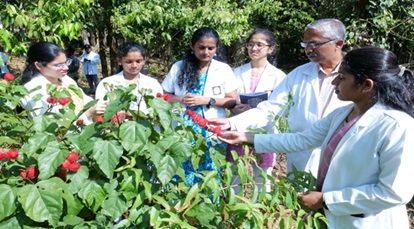
- Raw drug identification and authentication
- Organoleptic, macroscopic, and microscopic evaluation
- Herbarium preparation and pharmacognosy practicals
- Case-based learning and drug selection exercises
- Interactive discussions, quizzes, and student seminars
- Integration of modern pharmacology and analytical perspectives
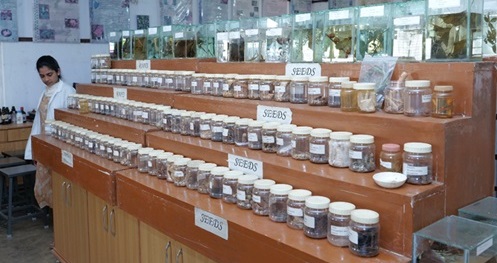
Herbal Garden & Practical Exposure
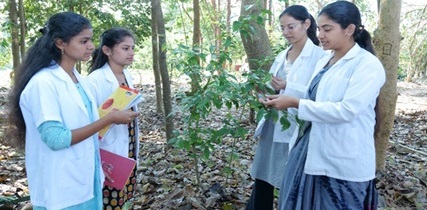
- Well-maintained medicinal plant garden supporting academic and research activities
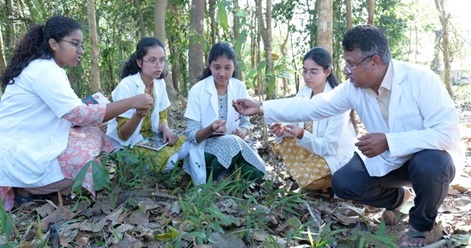
- Hands-on training in identification, cultivation, and conservation of medicinal plants
- Exposure to sustainable harvesting and Good Agricultural Practices (GAP)
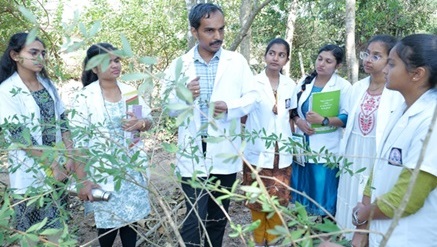
Research & Academic Enrichment
- Encouragement of student participation in seminars and projects
- Encouragement of faculty–student research initiatives
- Participation in workshops, conferences, and interdisciplinary collaborations
- Orientation towards experimental, clinical, and literary research in Dravyaguna
- Focus on quality control, standardization, and evidence-based herbal medicine
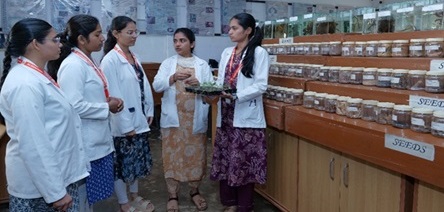
Academic Events & Outreach
- Dravya identification camps and herbal awareness programmes
- Guest lectures by experts in Dravyaguna, pharmacognosy, and herbal industries
- Community outreach programme
- Observance of Ayurveda-related academic days and subject-oriented workshops
- Focus on quality control, standardization, and evidence-based herbal medicine
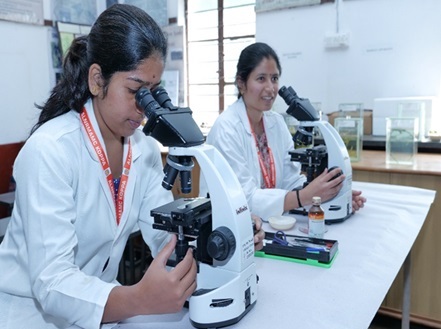
Student Academic Activities
- Medicinal plant identification competitions
- Student seminars and poster presentations
- Herbarium and monograph preparation activities